Digital Assets: Currencies, Securities, Commodities, or Property?
Disclaimer: This information is for educational purposes only. Cannon Financial Institute does not endorse any specific blockchain or digital asset, in the same way they do not endorse any security, commodity, or financial entity.
-
- Author
- Chris Nekvinda, PhD
-
- Published
- June 26, 2025
It’s not that often that professionals in financial services experience entire asset classes being created. Before digital assets like cryptocurrencies became a common household word, we might have to go back to 1993 when Exchange Traded Funds (ETFs) and financial professionals had to take time to understand not only what the new type of security was, but also how it worked. While the vast majority of Certified Wealth Strategists® do not sell or advise on digital assets, after 15 years, it does not seem that they are “going away anytime soon.”
The Certified Wealth Strategist® has always been grounded in three core pillars; 1) practice management, 2) client interaction skills, and 3) technical knowledge. As a CWS®, you may be currently in the functional role of a banker/credit and lending expert and, as such, do not really provide advice on any sort of investment, insurance, or trust solution. However, you are conversationally competent to understand the implications if a client shares “we have $450,000 in a managed account, and roughly $1,500,000 in assets held in our marital trust.”
It is in this same spirit that we present this series to you on the concept of digital assets. During the first quarter of 2025, you will receive three newsletters covering a different aspect of digital assets. Going forward, CWS® graduates will receive a monthly newsletter and a complimentary quarterly webinar on topics important for Certified Wealth Strategists®. Some of these topics will cover practice management, others will cover client interaction skills, and still others (like this first series) will cover technical domain information. More information will be coming on how to access the free webinar in the coming weeks. With that, let’s dive into the first of our series on digital assets.
Digital Assets: What Are They?
Digital assets represent a transformative and rapidly evolving asset class that holds significant implications for wealth management. Broadly defined, digital assets include cryptocurrencies, blockchain-based tokens, stablecoins, and non-fungible tokens (NFTs). These assets leverage blockchain technology to provide decentralization, transparency, and enhanced security.
Digital assets began with Bitcoin in 2009, introducing a decentralized, peer-to-peer electronic cash system. Over time, blockchain technology has enabled diverse asset types, each with distinct purposes and investor use cases. Understanding these differences is essential for Certified Wealth Strategists® serving high-net-worth (HNW) clients.
As of early 2023, a CNBC survey revealed that just about 20% of adults in the United States have purchased or traded some form of digital asset. That’s roughly the same number of individuals that own Individual Retirement Accounts (IRAs). As of January 2025, the Securities and Exchange commission is set to create a new “crypto council” to bring clarity for digital assets that fall under their purview. Additionally, the president’s artificial intelligence and crypto “czar” is working closely with a bicameral committee in Congress to guide various bills for regulatory clarity through the legislative process. With the emergence of traditional financial services organizations entering the digital asset space in various ways, e.g. through ETFs, through IRA offerings, or exploration of the tokenization of real-world assets, etc), as well as the aforementioned “crypto-friendly administration”, it’s important to be conversationally competent around digital assets and blockchain basics.
Digital Assets and Blockchain
Digital Assets and blockchains have a symbiotic relationship, but they are not the same concepts at all. Blockchain is a distributed, immutable ledger that enables recording transactions, tracking assets, and/or exchanging records in a peer-to-peer manner without the use of intermediaries. Blockchain transactions are immediately validated and cleared, then settled shortly thereafter, automatically without a central authority. In the financial world, only cash transactions are cleared and settled automatically without a central authority.
- According to Christopher Giancarlo, former head of the U.S. Commodities Futures Trading Commission, cryptocurrency “A digital representation of value built upon a decentralized computer network in which transactions are verified and maintained using cryptography to avoid forfeiture and consensus mechanisms in place of centralized authorities.” Cryptocurrency is the most common type of digital and each type will be explored in the next section. But understanding the differences in these inter-related concepts is important. A blockchain is a shared network on which digital assets are exchanged, while Digital Assets and Cryptocurrency are best used to describe assets that are transmitted and transferred via Blockchain networks.
Current State of the Regulatory Landscape
The current law governing Digital Assets is fragmented partially because it is not usual for a new type of asset class or currency to be created. It is even more challenging when many, not all, digital assets are decentralized, meaning there isn’t one legal entity accountable for the assets or blockchain, but rather groups of individuals working on these networks. Moreover, the global nature of digital assets means they are not germane to any single country, and they are available globally. Governments can work to restrict the buying and selling of digital assets via exchanges but struggle to ban them because of the inherently global nature of permissionless blockchain technology. In the United States, there is yet to be clear regulatory guidance on the assignment of supervision and enforcement. There are multiple digital asset bills under consideration by Congress in 2025. While clarity is sought by industry and investors, here is the general breakdown of authority over digital assets.
- CFTC (Commodity Futures Trading Commission): Treats Bitcoin and Ether as commodities, focusing on their use in derivatives markets.
- SEC (Securities and Exchange Commission): Classifies some tokens as securities, subjecting them to strict regulatory oversight. The SEC also has purview over US-based exchanges for digital assets. Exchanges are the “on/off” ramp for investors and swap US dollars for digital assets for a fee.
- IRS (Internal Revenue Service): Requires taxation of cryptocurrencies as property, meaning they are subject to capital gains tax.
Different agencies often have overlapping or conflicting views on digital assets. Investors and advisors must navigate complex reporting requirements and anti-money laundering (AML) obligations. All digital assets and exchanges are subject to all anti-money related laws and most laws surrounding securities. However, as there is still a lack of clarity from the US Congress on crypto rules and regulations, there are challenges for some investors and blockchain companies to be compliant with US law. It is highly anticipated that the US will ratify new laws for the digital asset marketplace in 2025 or 2026.
Understanding Different Types of Digital Assets
All cryptocurrencies are types of digital assets, but not all digital assets are cryptocurrencies. Unfortunately, this nuance is often overlooked, and the majority of digital assets are broadly referred to as cryptocurrencies. Let’s highlight nine different types of digital assets.
Cryptocurrencies
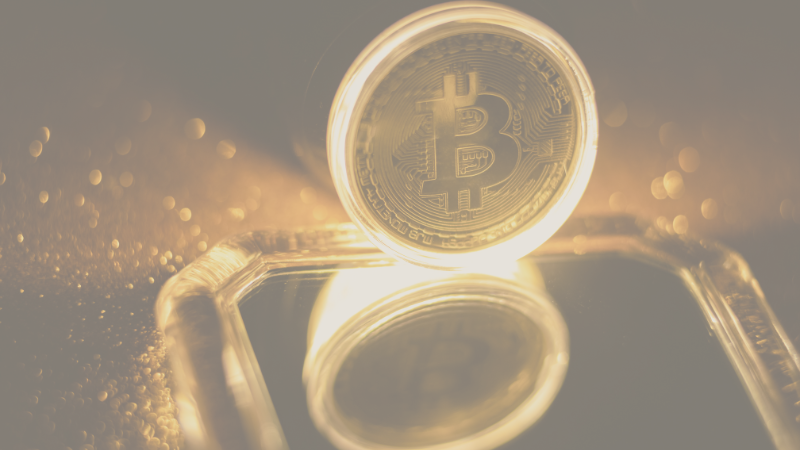
- Bitcoin (BTC): As the first cryptocurrency, Bitcoin is primarily viewed as a store of value. Its fixed supply and decentralized nature make it akin to digital gold. It is the largest and most decentralized of all digital assets and cryptocurrencies. Bitcoin operates on a blockchain of the same name. While there are thousands of digital assets and cryptocurrencies, Bitcoin represents greater than 50% of the entire digital asset marketplace.
- Altcoins: Cryptocurrencies other than Bitcoin, such as Ethereum (ETH), Cardano (ADA), and Solana (SOL) are often referred to as “altcoins” or simply “alts”. Many of these serve specific purposes, such as enabling smart contracts (Ethereum) or offering enhanced scalability and energy efficiency (Cardano). These kinds of altcoins often exist on programmable blockchains and are associated with far-ranging technology applications for finance, gaming, governance, and entertainment to name a few use cases.
Stablecoins
Digital Assets that are designed to maintain a stable value by being pegged to assets like the US dollar (e.g., USDC, USDT) or commodities like gold are called “Stablecoins”. Stablecoins are widely used for transferring value, hedging against volatility, and enabling liquidity in DeFi platforms. Stablecoins are under increasing scrutiny as they straddle the line between traditional banking and decentralized systems. Stablecoins can also be backed by other forms of digital assets (e.g. Bitcoin) or via algorithmic code to keep the price pegged to its target.
Central Bank Digital Currencies (CBDCs)
Digital currencies issued by central banks offer a government-backed alternative to cryptocurrencies are called Central Bank Digital Currencies or CBDCs for short. These assets aim to provide a stable, regulated digital payment system. Examples include China’s digital Yuan and pilot projects in Europe. The United States is currently exploring if it will introduce a “digital dollar”. Unlike cryptocurrencies, CBDCs are centralized and controlled by governments. In this regard, governments can get all of the benefits from using blockchain for transparent transactions without having to worry about the market volatility of a public asset like Bitcoin. It is important to note that the popular stablecoin called USDC (United States Digital Coin) is not an official Central Bank Digital Currency despite its name and peg to the U.S. Dollar.
Tokens
With Digital Assets, coins and tokens serve distinct purposes and have different underlying technologies. Coins are digital assets that operate on their own independent blockchains, like Bitcoin or Ethereum. They are primarily used as a medium of exchange, a store of value, or a unit of account. On the other hand, tokens are built on existing blockchains, typically using smart contracts. Tokens can represent a wide range of assets or utilities, such as digital collectibles, governance rights, or access to specific services within a platform. For instance, Ethereum supports a variety of tokens like ERC-20, which can represent anything from shares in a decentralized organization to points in a loyalty program. In essence, coins are the native currency of a blockchain, while tokens are created for specific applications and functionalities within an existing blockchain. Let’s look at common types of tokens.
- Utility Tokens: Provide access to specific blockchain-based services or applications (e.g., Ether is required to use the Ethereum network).
- Governance Tokens: Grant holders voting rights in decentralized platforms, allowing them to influence the future direction of a project (e.g., Uniswap’s UNI).
- Security Tokens: Represent ownership in a real-world asset or company and are regulated as securities in many jurisdictions. In the United States, Security tokens are always considered to be regulated securities and fall under the purview of the SEC.
- Non-Fungible Tokens (NFTs) are unique digital assets representing ownership of items such as art, music, or collectibles. Stored on blockchains, NFTs are non-interchangeable and one-of-a-kind. Significant development has continued with non-fungible tokens as they are used to represent ownership and provenance in industries like art, gaming, and intellectual property.
- Meme coins are simply coins and tokens created as a joke or as a collectible. There isn’t much inherent utility or functionality to meme coins, but they are purchased and traded by supporters of the various meme coin projects. While they may be humorous in nature, some meme coins have market caps worth a billion USD or more making them no laughing matter.
Storage
Digital Assets are stored within software called “wallets”. These wallets are personal and require the owner to authenticate any transaction sent from the wallet address. Wallets can either be “offline” wallets or “cold” wallets which are not connected to the internet. These are the safest wallets. However, there is a risk of losing the device or damaging it. The other types of wallets are “hot” wallets or software wallets that are online. These are easier for crypto traders and investors, but the risk comes from the fact that they are constantly connected to the internet, exposing the possibility of hacking or other security risks.
All Digital Assets are not the same. “Coins” are assets that are native to their blockchain (e.g., Bitcoin, Ether) and are used for transactions and as stores of value. Tokens are digital assets that are built on existing blockchains and used for specific functions within ecosystems. NFTs represent unique ownership rights to digital or physical assets. With this general overview of blockchains and digital assets, let’s quickly review how these digital assets are regulated.
Digital Asset Investment Vehicles
In 2024, the Securities and Exchange Commission approved both Bitcoin and Ethereum Exchange Traded Funds (ETFs). Crypto ETFs provide investors with a way to gain exposure to certain digital assets without the need to directly own or store the digital assets in wallets. These ETFs track the price performance of cryptocurrencies by either holding the actual digital assets (spot ETFs) or investing in futures contracts linked to those assets. By trading on traditional stock exchanges, crypto ETFs offer a familiar and accessible investment vehicle for those who want to invest in the crypto market through their regular brokerage accounts.
One of the primary benefits of crypto ETFs is convenience. Investors can easily buy and sell shares of a crypto ETF just like they would with any other stock, without dealing with the complexities of managing digital wallets or navigating crypto exchanges. Additionally, crypto ETFs provide diversification by allowing investors to gain exposure to a basket of cryptocurrencies or related assets, reducing the risk associated with holding a single digital currency. This makes them an attractive option for those looking to diversify their investment portfolios with exposure to the growing crypto market. Moreover, financial services professionals in estate planning can better manage their clients’ digital assets when they exist within ETFs because wallets and custody of the actual digital asset is not needed. Crypto ETFs have CUSIP numbers like every other security and are regulated by the SEC or the CFTC (depending on if they are spot ETFs or futures-driven ETFs, respectively).