Articles
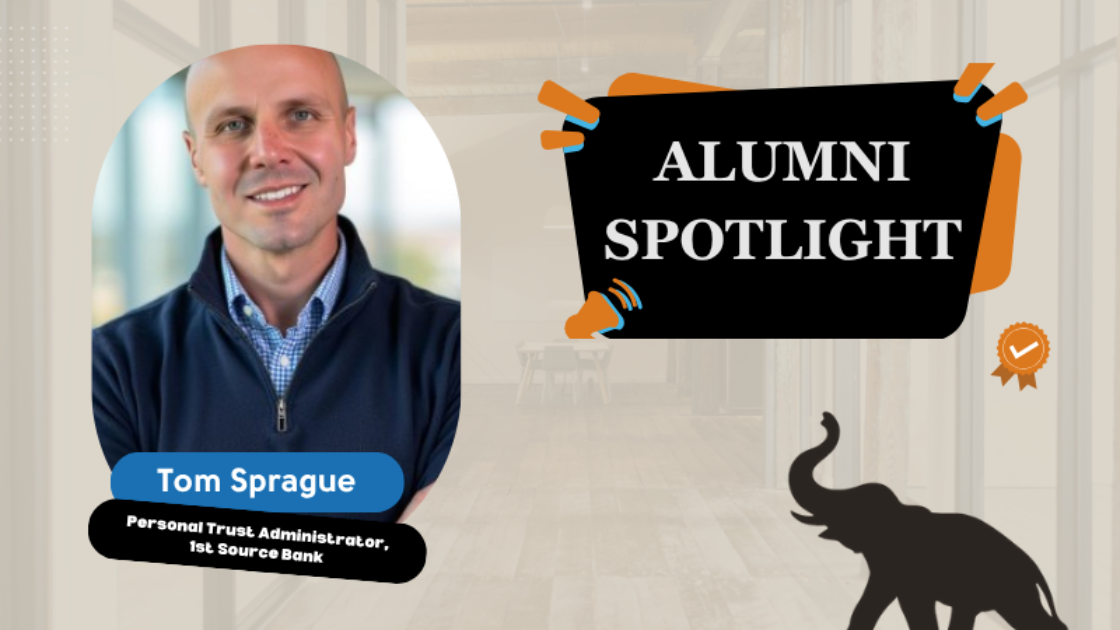
Cannon Graduate Spotlight: Tom Sprague
-
- Author
- Cannon Financial Institute
-
- Published
- March 30, 2026
Seeing the Full Picture Starts Early and Carries Through the Entire Career
Tom Sprague’s path into wealth management didn’t begin with a job offer. It started with curiosity.
He grew up in a family rooted in financial services, where conversations around insurance, planning, and investing were part of everyday life. By the time he was 10, he was already asking questions about how money works and what it means for people’s lives.
That curiosity turned into a career spanning more than 15 years across personal banking, private banking, commercial banking, and trust.
His time in commercial banking, though, changed how he sees clients.
Business owners don’t separate their financial lives the way institutions often do. Their business, their family, and their future are tied together. Yet, advice is still often delivered in silos.
That disconnect stayed with him.
“When I’m making a recommendation, it’s going to impact your family… but it’s also going to impact your business, your employees, and your stakeholders.”
Today, when Tom works with clients, he looks beyond the immediate decision. He considers how it affects the family, the business, and everyone connected to both.
For him, the most rewarding part of the profession isn’t the complexity.
It’s when things start to make sense.
“Helping people realize their dreams… and being able to articulate it in a way that makes sense—that’s what I love.”
When a client understands where they’re going. When they see that even after a setback, they’re still on track. That moment, when the plan feels real, is what matters most.
Why the Ability to Simplify Complex Ideas Becomes a Defining Skill
Cannon played a meaningful role in shaping that approach.
The technical knowledge matters. But what stood out to Tom was something else. It wasn’t just about learning concepts. It was about understanding why they matter and how to communicate them clearly.
There’s a tendency in the industry to overcomplicate. To prove expertise by sounding complex.
This is where Cannon takes a different approach.
“They don’t just give you the information. They show you why it matters and how to explain it so it actually makes sense.”
That shift stayed with him long after the coursework ended. So did the relationships.
He still connects with classmates today. They share ideas, compare approaches, and help each other think through challenges.
“You may have a classmate who really understood something you struggled with. You can reach out, and they’ll show you how they think about it.”
That network continues to be part of how he grows in his role.
How Perspective, Community Involvement, and Personal Values Shape the Long-Term Impact
Outside of work, Tom brings that same mindset into his community.
He serves on multiple nonprofit boards, including his local Community Foundation. Much of the work focuses on families, children, and long-term community needs. One issue stands out in particular: food insecurity.
In his county alone, more than 1,000 families rely on food pantry services each week, and that number continues to rise.
“The thought of a child going to bed hungry… that’s something I take very seriously.”
That reality has shaped how he thinks about service. It’s not abstract. It’s happening close to home.
An early experience reinforced that perspective. After getting married, Tom and his wife moved to Colorado. While living there, he noticed something that stuck with him. People surrounded by mountains had never explored them. At the same time, they had experienced parts of his hometown more than he had.
It was a simple realization: it’s easy to overlook what’s right in front of you. That thinking now carries into how he approaches both his work and his life.
When asked what advice he would give someone starting out, Tom keeps it simple.
“Choose your hard.”
You can put in the work now and build something meaningful, or you can delay it and deal with it later. Either way, the work shows up.
Looking ahead, Tom doesn’t define success by titles or milestones. He thinks about impact. On his clients. On his community. On the people around him.
“I want to be remembered as someone who made a significant impact in my community.”
Because in the end, the work isn’t just about building wealth.
It’s about building something that lasts.